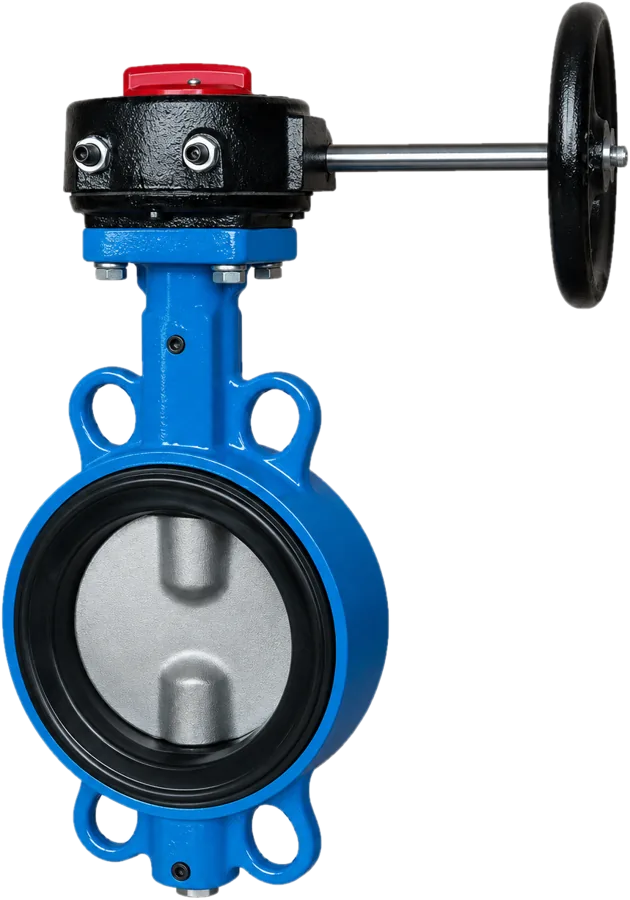
A butterfly valve opens and closes with a quarter turn. A round disc sits in the bore. Turned across the pipe, it closes the line. Turned in line with the flow, it opens the line. Butterfly valves are shorter and lighter than gate valves of the same size, which is why they are used so widely on water lines.
The disc and seat work the same way in most designs. The body style is what changes how the valve is fitted to the pipe, and whether you can take the pipe off one side. There are four main body styles: wafer, lug, double-flanged and grooved.
The short answer
- Wafer: the lightest and lowest-cost option, for lines where the pipe stays connected on both sides.
- Lug: for places where you may need to remove the pipe on one side while the other side stays under pressure. Ask for the valve’s end-of-line rating. It can be lower than the normal rating.
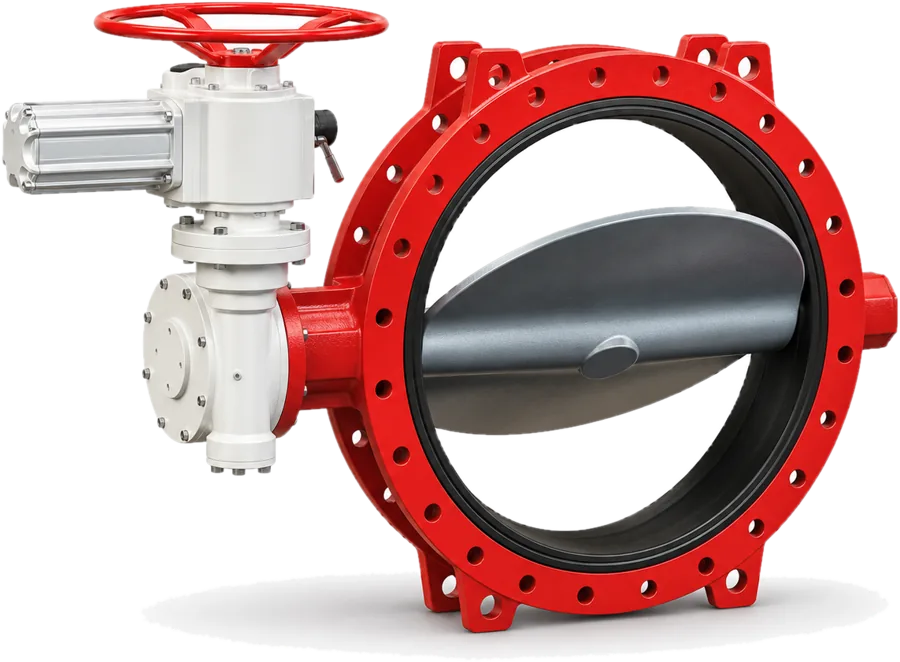
- Double-flanged: for large water mains. Our range goes up to DN2400 (concentric) and DN2600 (eccentric).
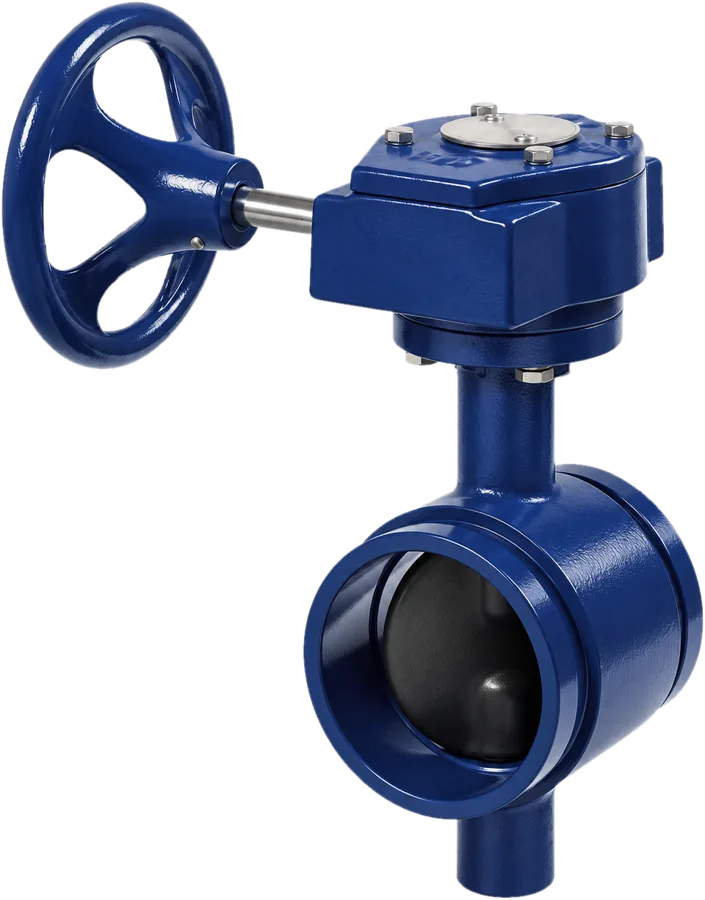
- Grooved: for grooved pipe systems joined with couplings, common in building services and fire water pipework.
| Body style | How it is fitted | Pipe removed on one side? | Our sizes |
|---|---|---|---|
| Wafer | Clamped between two pipe flanges by long bolts | No | DN32 to DN600 |
| Lug | Each pipe flange bolted to threaded lugs on the body | Only if the valve is rated for it | DN50 to DN600 |
| Double-flanged | A flange at each end of the body, bolted to the pipe flanges | Depends on the design. Confirm before ordering | Concentric DN50 to DN2400, eccentric DN100 to DN2600 |
| Grooved | Grooved ends joined to grooved pipe with couplings | Check the coupling arrangement | DN50 to DN300 |
Wafer and lug butterfly valves
Wafer
A wafer valve has no flanges of its own. It sits between two pipe flanges. Long bolts pass from one flange to the other, outside the valve body, and clamp it in place. Some bodies have holes or slots to help line the valve up during fitting.
Because the bolts clamp the valve between both flanges, a wafer valve needs pipe on both sides. If you take off the downstream pipe, nothing holds the valve in place against the pressure. Do not use a wafer valve at the end of a line or where one side will be disconnected.
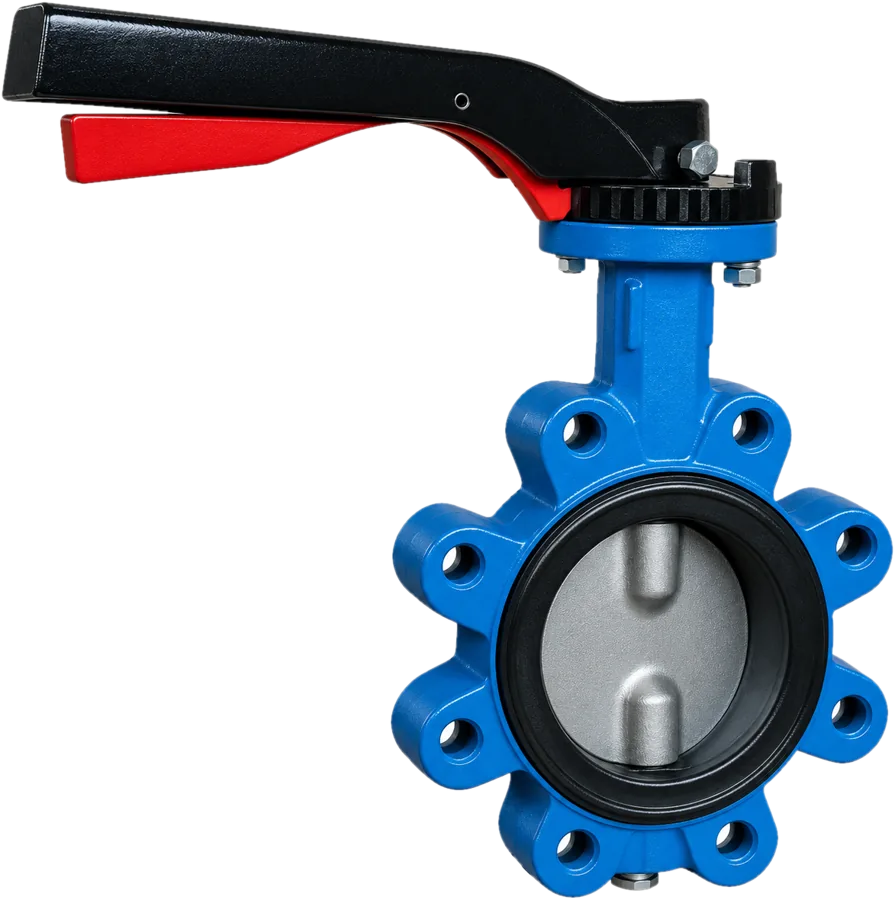
Lug
A lug valve has threaded lugs around the body. Each pipe flange is bolted to the lugs with its own shorter bolts. You can then remove the pipe on one side and leave the other side connected.
This is called end-of-line or dead-end service. Many makers give a lower pressure rating for it than for normal shut-off in a full pipeline. If you plan to work on the line this way, ask for the dead-end pressure rating and the pressure direction. Do not rely on the normal working pressure. A lug body also uses more material than a wafer body, so it is heavier and costs more.
Length
Wafer and lug valves are made to short face-to-face lengths. You will often see EN 558 series 20 or API 609 on the datasheet.
Double-flanged: concentric or eccentric
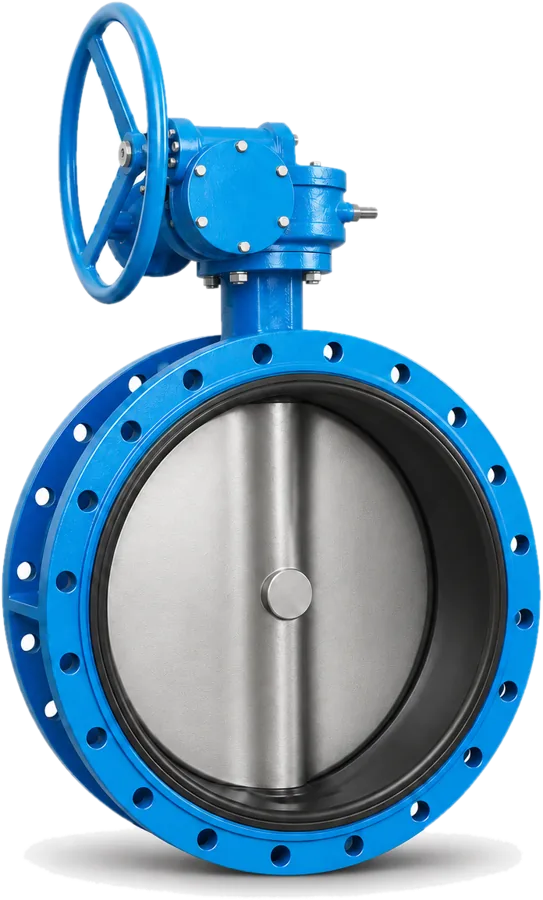
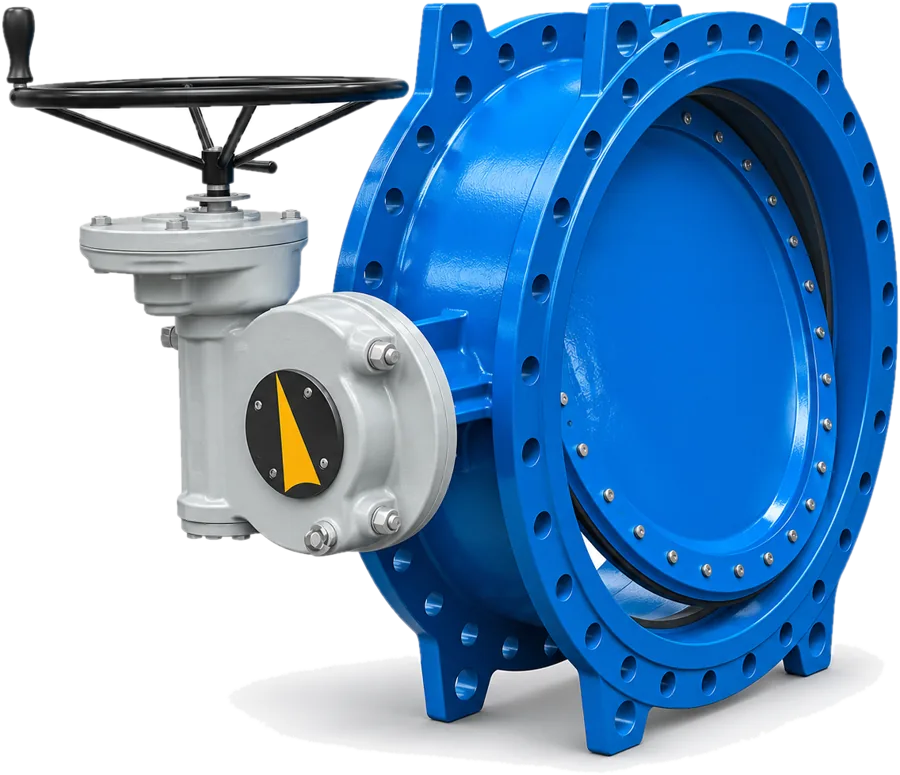
A double-flanged valve has a full flange at each end and bolts directly to the pipe flanges. It is the usual choice on large transmission and distribution mains. Length is given as EN 558 series 13 (short) or series 14 (long). State which one your drawing uses.
Concentric: the disc and stem are centred in the bore, and the disc seals against a rubber seat. It is a simple design and widely used on water lines.
Eccentric: the stem is set off-centre, so the disc swings clear of the seat as soon as it starts to open. There is less rubbing on the seal, which reduces wear. This design is used for large-diameter mains. The word “eccentric” does not mean a higher pressure rating. Our concentric and eccentric valves are both offered in PN10 and PN16.
Soft-sleeve: on this design a rubber sleeve lines the whole inside of the body, so the water touches only the rubber and the disc. Our soft-sleeve valves cover DN100 to DN2000 with a short series 20 length.
Grooved valves and operators
A grooved butterfly valve has grooves cut or rolled into both ends. It joins grooved pipe with couplings instead of flanges and bolts. This makes fitting quick, and grooved systems are widely used for building water services and fire water pipework. The groove profile, coupling and gasket must all match. If you mix brands, check that the parts fit together. If your project needs a specific fire certification, tell us which one. We will confirm what we can supply.
Operators. Small valves can be turned by hand. Larger valves use a worm gearbox with a handwheel. For remote control, an actuator is fitted. All our iron butterfly valves have an ISO 5211 top flange. ISO 5211 is the standard mounting for part-turn gearboxes and actuators. The actuator still has to match the flange size, the drive and the torque that valve needs.
Our butterfly valves
Browse the full range on the butterfly valves page.
- Wafer butterfly valve: DN32 to DN600. PN10, PN16, 150 psi or 200 psi. Length EN 558 series 20 or API 609. Fits EN 1092 PN6/10/16, ANSI B16.1 or JIS 10K flanges.
- Lug butterfly valve: DN50 to DN600. PN10, PN16, 150 psi or 200 psi. Length EN 558 series 20 or API 609. Lugs drilled to EN 1092 PN6/10/16, ANSI B16.1 or JIS 10K.
- Double-flanged concentric butterfly valve: DN50 to DN2400. PN10 or PN16. Length EN 558 series 13. Flanges EN 1092 PN10/16 or ANSI B16.1.
- Double-flanged eccentric butterfly valve: DN100 to DN2600. PN10 or PN16. Length EN 558 series 13 or 14. Flanges EN 1092 PN10/16 or ANSI B16.1.
- Grooved butterfly valve: DN50 to DN300. PN10, PN16, 150 psi or 200 psi. Worm gearbox or bare stem.
- Soft-sleeve butterfly valve: DN100 to DN2000. PN10, PN16, 150 psi or 200 psi. Length EN 558 series 20. Fits EN 1092 PN6/10/16, ANSI B16.1 or JIS 10K flanges.
Pressure ratings and flange standards are options you choose per order. For chemical dosing and treated-water lines, see our plastic butterfly valves.
What to send for a quotation
Put one line in your list for each valve type. For each line, give:
- Size (DN) and quantity.
- Body style: wafer, lug, double-flanged or grooved.
- Pressure class: PN10, PN16, 150 psi or 200 psi.
- Flange standard and drilling, or the groove standard for grooved valves.
- Face-to-face length or series, if you are replacing an existing valve.
- Whether the valve will be used at the end of a line, and in which pressure direction.
- Operator: lever, gearbox with handwheel, or actuator (with power supply and control signal).
- Medium and temperature.
- Any standard or certificate named in your project specification.
Send your list and we will confirm the matching options with the quotation.