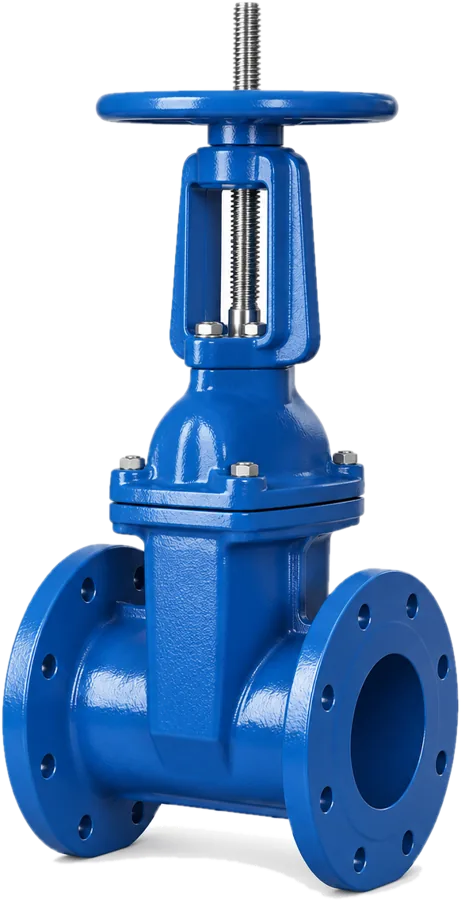
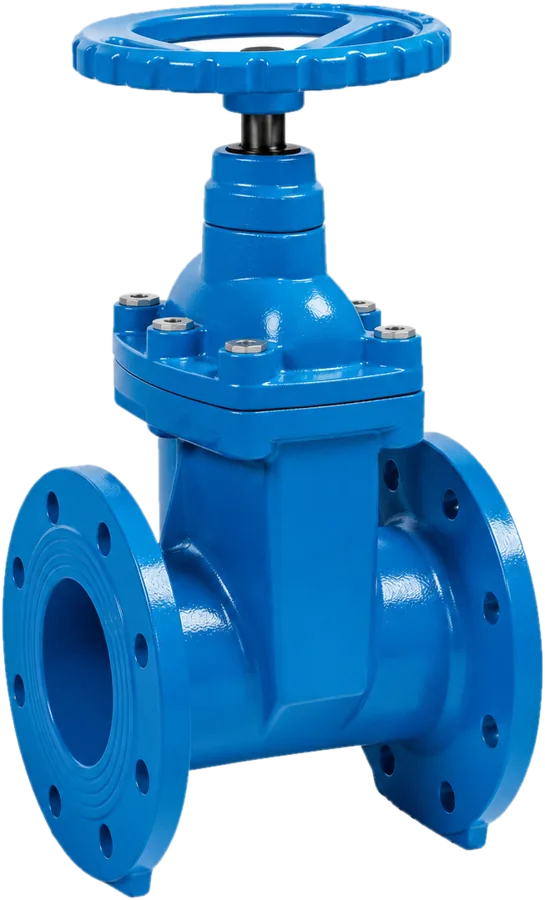
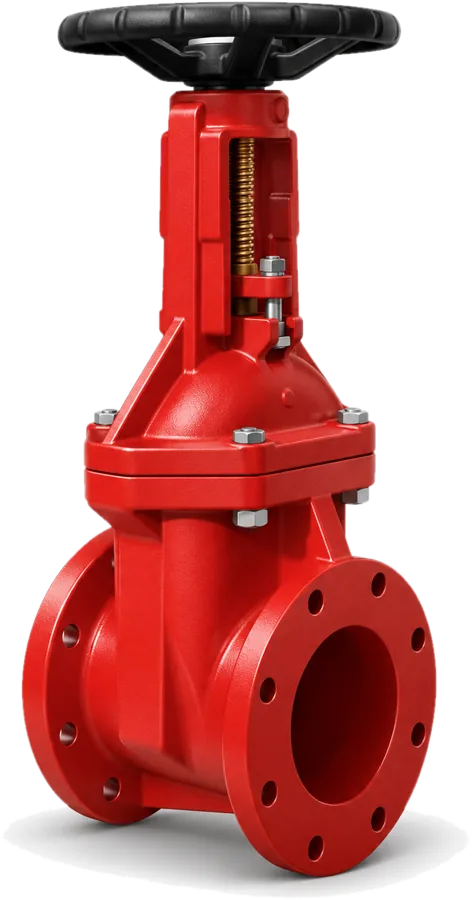
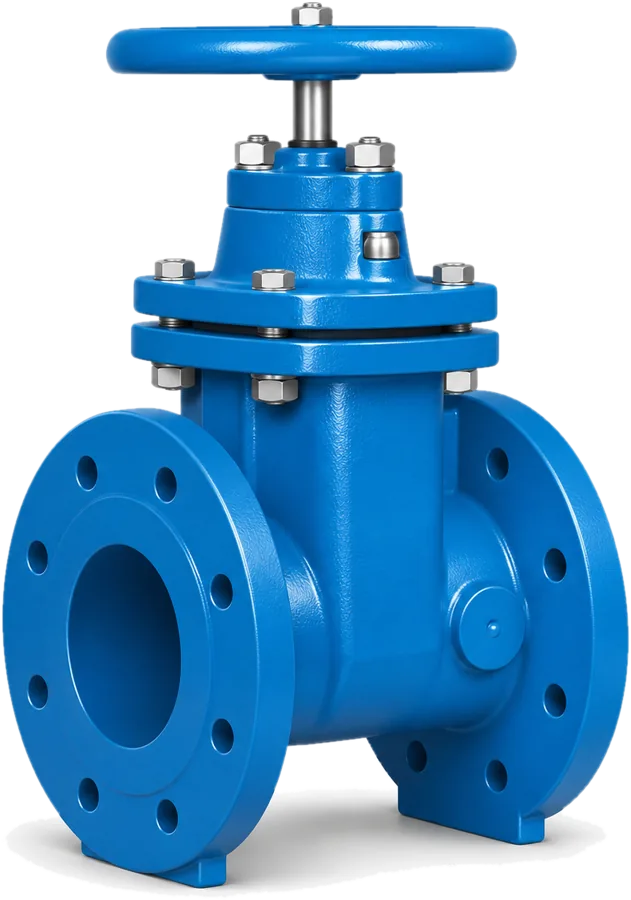
A gate valve is an on/off valve. When it is open, the gate (also called the wedge) is lifted out of the flow path. When it is closed, the gate seals across the bore. Gate valves are not made for throttling. Use them fully open or fully closed.
When you buy a gate valve for a water line, you make two choices: the seat, resilient or metal, and the stem, rising or non-rising. You also need to match the face-to-face length and flange drilling of the pipeline. This guide covers all three.
The short answer
- Resilient-seated gate valves are widely used for clean-water supply and distribution. The rubber-covered wedge seals against a smooth body with no groove in the bottom, so dirt has nowhere to collect, and the valve usually needs less torque to close.
- Metal-seated gate valves are still specified, often to replace existing metal-seated valves like for like, or because the project specification asks for them.
- Choose a rising stem (OS&Y) when operators must see at a glance whether the valve is open, for example in pump rooms. Choose a non-rising stem (NRS) when headroom is limited or the valve is buried.
How the two seat types seal
Resilient-seated
The wedge is a metal casting fully covered in rubber. On our valves it is a ductile iron wedge covered in EPDM. When the valve closes, the rubber is pressed against the inside of the body and forms the seal.
Because the rubber does the sealing, the bottom of the body can be smooth, with no seating groove. When the valve is open, the bore is clear and small particles pass straight through. Nothing builds up where the wedge has to close.
Metal-seated
The wedge has metal seat rings that close against matching rings in the body. On our valves these rings are bronze or brass. The body needs a groove at the bottom to guide and seat the wedge. Sand and sediment can settle in this groove and stop the valve from closing fully.
Metal-to-metal sealing also needs more force than compressing rubber. Never force a gate valve closed with an extended lever or wrench. Too much torque can damage the stem, the wedge or the seats.
| Resilient-seated | Metal-seated | |
|---|---|---|
| How it seals | Rubber-covered wedge pressed against the body | Metal seat rings on the wedge and in the body |
| Bottom of the bore | Smooth, no groove | Groove where the wedge seats |
| Closing effort | Usually lower | Usually higher |
| Our size range | DN50 to DN1000 | DN40 to DN600 |
| Our pressure options | PN10, PN16, 150 psi or 200 psi | PN10 or PN16 |
Seat type alone does not decide whether a valve suits raw water, sewage or water with a lot of sand. If the water carries solids, describe them in your inquiry so the valve can be checked for that duty.
Rising or non-rising stem
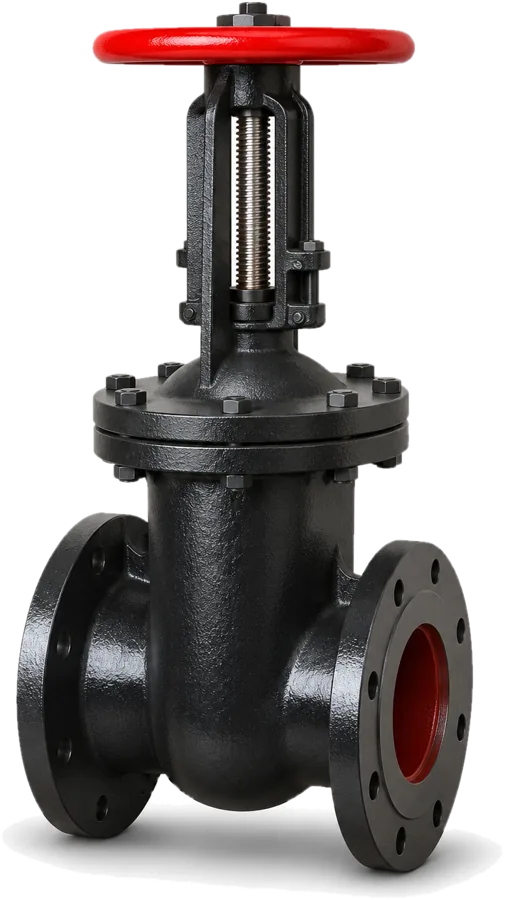
Rising stem (OS&Y)
OS&Y stands for outside screw and yoke. The stem thread sits above the body, outside the water. When you open the valve, the stem rises with the wedge. The height of the stem shows whether the valve is open or closed. The thread can be inspected and greased.
Leave enough room above the valve for the stem at full opening. Fire protection specifications often call for OS&Y gate valves because the open position can be seen. If your project needs a specific fire certification, tell us which one. We will confirm what we can supply.
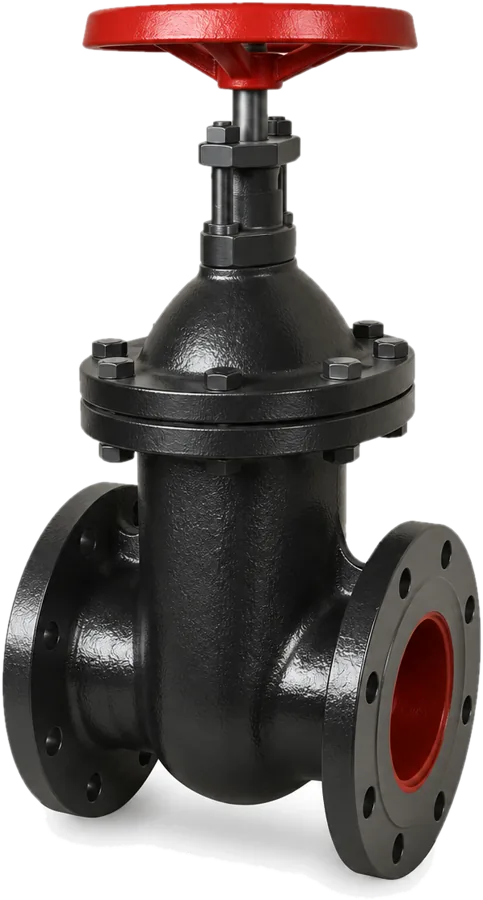
Non-rising stem (NRS)
The stem turns but does not move up or down. The wedge travels up and down a thread inside the body. The valve stays the same height whether it is open or closed, so it fits where space is tight. This design is common for buried valves on water mains. They are operated from the surface with a key, sometimes through an extension spindle. The stem thread is in contact with the water.
Length, flanges and pressure on a datasheet
Two valves with the same DN can still be different lengths and have different flange drilling. If you are replacing a valve, check both against the existing pipework.
Face-to-face length is the distance between the two flange faces. These are the patterns you will see most on gate valve datasheets:
| Pattern | Also called | Length at DN100 | Length at DN200 |
|---|---|---|---|
| DIN 3202 F4 (short) | EN 558 basic series 14 | 190 mm | 230 mm |
| DIN 3202 F5 (long) | EN 558 basic series 15 | 300 mm | 400 mm |
| BS 5163 | EN 558 basic series 3 | 229 mm | 292 mm |
| ASME B16.10 | ANSI B16.10 | Depends on valve type and class. Check the drawing. | |
Flange drilling. EN 1092-2 PN10 and PN16 flanges have the same drilling up to DN150. From DN200 they differ. For example, at DN200 both use a 295 mm bolt circle, but PN10 has 8 holes and PN16 has 12. State the pressure class you need even when the drilling is the same, because the drilling does not tell you the valve’s pressure rating.
150 psi and 200 psi are working-pressure ratings used on American-pattern waterworks valves. They are not the same thing as ASME Class 150 flanges. If you order a valve rated in psi, specify the flange drilling separately.
ISO 5210 is the standard for mounting multi-turn gearboxes and actuators. A gate valve with an ISO 5210 top flange can take a matching gearbox or electric actuator. The actuator still has to be sized for the torque and thrust that valve needs.
Our gate valves
All six types are ductile iron waterworks gate valves. Browse them all on the gate valves page.
- Resilient-seated gate valve, rising stem, PN flanges: DN50 to DN1000, PN10 or PN16. Face-to-face DIN 3202 F4/F5 or BS 5163, flanges EN 1092 PN10/16.
- Resilient-seated gate valve, non-rising stem, PN flanges: DN50 to DN1000, PN10 or PN16. Face-to-face DIN 3202 F4/F5 or BS 5163, flanges EN 1092 PN10/16.
- Resilient-seated gate valve, rising stem, ANSI face-to-face: DN50 to DN1000, 150 psi or 200 psi. Face-to-face ANSI B16.10, flange drilling confirmed with the quotation.
- Resilient-seated gate valve, non-rising stem, ANSI face-to-face: DN50 to DN1000, 150 psi or 200 psi. Face-to-face ANSI B16.10, flange drilling confirmed with the quotation.
- Metal-seated gate valve, rising stem: DN40 to DN600, PN10 or PN16. Face-to-face DIN 3202 F4 or BS 5163, flanges EN 1092 PN10/16.
- Metal-seated gate valve, non-rising stem: DN40 to DN600, PN10 or PN16. Face-to-face DIN 3202 F4 or BS 5163, flanges EN 1092 PN10/16.
All have an ISO 5210 top flange. Pressure ratings and flange standards are options you choose per order.
What to send for a quotation
Put one line in your list for each valve type. For each line, give:
- Size (DN) and quantity.
- Pressure class: PN10, PN16, 150 psi or 200 psi.
- Seat: resilient or metal.
- Stem: rising (OS&Y) or non-rising (NRS).
- Face-to-face pattern: F4, F5, BS 5163 or ANSI B16.10.
- Flange standard and drilling.
- Operator: handwheel, cap top for a key, gearbox or electric actuator.
- Medium and temperature, and any sand or other solids.
- Any standard or certificate named in your project specification.
If you are replacing existing valves, a drawing or a photo with the length measured helps. Send your list and we will confirm the matching options with the quotation.